Regional Gas Price Spikes and Why They Matter
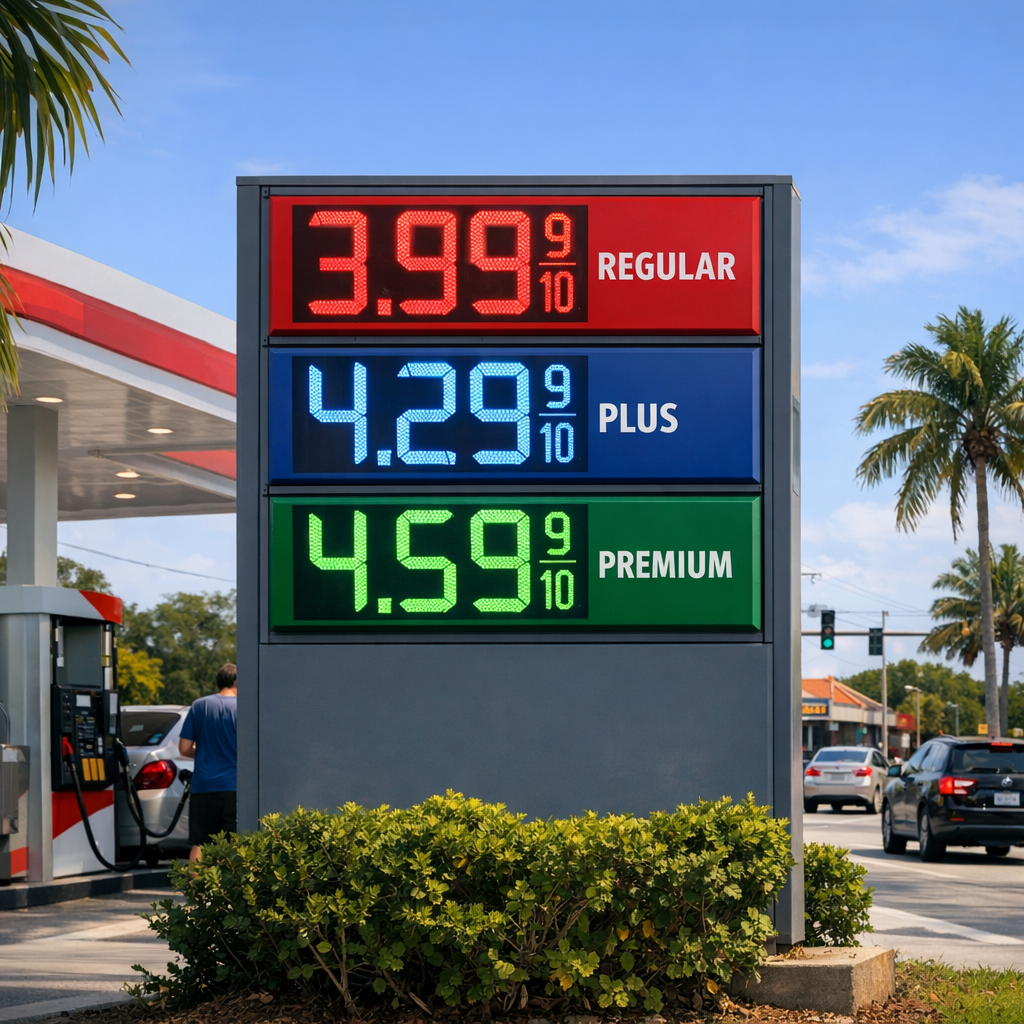
Gas prices crossing the $4-per-gallon threshold always grab attention—but when it happens unevenly across regions, the story becomes far more complex than a simple price spike. In Florida, five counties recently hit that $4 mark, signaling not just higher costs at the pump but deeper ripple effects throughout local economies. From commuters to logistics companies, the impact is anything but uniform.
This article breaks down what’s driving these regional price differences, why they matter more than national averages suggest, and how both businesses and everyday consumers can adapt. Along the way, we’ll explore real-world implications, including how fuel pricing quietly squeezes industries that rely on transportation.
What Drives Local Differences in Gas Prices
At first glance, gas prices might seem like a national issue driven by global oil markets. While crude oil prices, refinery capacity, and geopolitical events do play major roles, local factors often determine what drivers actually pay.
In Florida, several elements contribute to regional price spikes. Transportation costs for fuel distribution vary depending on proximity to ports and pipelines. Areas farther from major supply hubs often face higher delivery costs, which get passed on to consumers. Seasonal demand also plays a role—tourism-heavy counties tend to see sharper increases, especially during peak travel periods.
Taxes and local regulations can further widen the gap. Even small differences in county-level costs can push prices above psychological thresholds like $4 per gallon. When that happens, consumer behavior often shifts quickly, with people cutting back on discretionary travel or seeking alternative transportation.
An effective visual here would be a map of Florida highlighting counties with varying gas prices, helping readers see how localized the issue really is.
Business and Supply Chain Pressures
While consumers feel the sting at the pump, businesses—especially those reliant on transportation—often face more complex challenges. One particularly insightful observation from industry discussions is that many logistics and delivery companies base their fuel surcharges on national averages rather than local prices.
This creates a mismatch. A trucking fleet operating in a high-cost region like parts of Florida may be paying significantly more for fuel than their contracts account for. Initially, companies absorb these extra costs, which quietly erodes profit margins. Over time, however, this pressure builds until businesses are forced to adjust pricing, renegotiate contracts, or cut costs elsewhere.
For example, a regional delivery company serving central Florida might see fuel costs increase by 10–15% compared to projections. If their pricing model is tied to national averages, they can’t immediately pass those costs on to customers. The result is a temporary but real financial squeeze.
This dynamic can ripple through supply chains. Higher transportation costs can lead to increased prices for goods, delayed deliveries, or reduced service coverage in less profitable areas.
A useful chart here could compare national average fuel prices with regional spikes, illustrating the gap businesses must navigate.
How Households Feel the Impact
For individuals, the impact of rising gas prices goes beyond just spending more at the pump. It influences daily decisions, from commuting habits to shopping behavior.
When gas prices hit $4 per gallon, many households begin to adjust. Some may consolidate trips, carpool, or shift to remote work if possible. Others might delay travel plans or opt for more fuel-efficient vehicles.
There’s also an indirect effect. As businesses face higher transportation costs, those expenses often get passed on to consumers in the form of higher prices for goods and services. Groceries, delivery fees, and even restaurant prices can increase as fuel costs rise.
Consider a family that spends $200 a month on gas when prices are around $3 per gallon. At $4 per gallon, that same usage jumps to roughly $267—a noticeable increase over time. Multiply that across thousands of households, and the economic impact becomes significant.
An infographic showing how gas price increases affect monthly household budgets would help make this section more tangible.
Broader Economic Signals and Trends
Regional gas price spikes can act as early warning signs of broader economic shifts. When certain areas experience higher costs than others, it can indicate supply bottlenecks, infrastructure limitations, or localized demand surges.
In Florida’s case, tourism plays a major role. As visitor numbers rise, so does fuel demand, particularly in coastal and urban counties. This seasonal pressure can amplify existing supply challenges.
Additionally, inflationary pressures often intersect with fuel costs. When energy prices rise, they contribute to overall inflation, affecting everything from transportation to manufacturing. Policymakers and economists closely watch these trends because they can signal future economic adjustments.
Businesses, especially small and mid-sized ones, are often the most vulnerable. Unlike large corporations, they may lack the resources to hedge against fuel price volatility or quickly adapt their pricing models.
Adapting to Higher Fuel Costs
While no one can control global oil markets, there are practical ways both individuals and businesses can manage the impact of rising fuel costs.
For individuals, small changes can add up. Driving more efficiently—such as maintaining steady speeds and avoiding rapid acceleration—can improve fuel economy. Keeping tires properly inflated and reducing excess weight in vehicles also helps. Planning trips to combine errands can cut down on unnecessary mileage.
Using apps or websites to compare gas prices locally can lead to noticeable savings over time, especially in regions where prices vary significantly between nearby stations.
For businesses, the approach is more strategic. Companies can review their fuel surcharge policies to better reflect regional costs rather than relying solely on national averages. Investing in route optimization software can reduce fuel consumption by minimizing unnecessary travel.
Some organizations are also exploring alternative solutions, such as transitioning portions of their fleet to electric vehicles or hybrid models. While the upfront cost can be high, the long-term savings and stability can offset fuel price volatility.
A step-by-step visual guide showing how businesses can calculate and adjust fuel surcharges based on regional data would be especially helpful here.
To make the topic more accessible, several visual elements could be incorporated throughout the article. A regional map of gas prices would immediately show disparities across Florida. Charts comparing national averages to local prices would highlight the challenges businesses face. Infographics breaking down household budget impacts could help readers connect the issue to their daily lives.
Additionally, a simple table comparing cost scenarios—such as fuel expenses at $3 versus $4 per gallon—could provide quick, digestible insights.
The rise of gas prices to $4 per gallon in parts of Florida is more than just a headline—it’s a reminder of how uneven and interconnected energy costs can be. Regional variations matter, often more than national averages, and they carry real consequences for businesses, consumers, and the broader economy.
For companies, especially those in logistics and transportation, these disparities can quietly erode margins until adjustments become unavoidable. For individuals, the impact shows up not only at the pump but across everyday expenses.
Understanding these dynamics is the first step toward adapting. Whether through smarter driving habits, better business strategies, or increased awareness of local price trends, there are ways to navigate the challenge more effectively.
As fuel markets continue to fluctuate, staying informed and flexible will be key. What happens in a handful of Florida counties today could signal broader trends tomorrow.
References and Further Reading
For readers interested in exploring this topic further, consider reviewing coverage from the Daytona Beach News-Journal on Florida gas price trends. National data from the U.S. Energy Information Administration (EIA) provides broader context on fuel pricing. Industry insights from logistics and transportation publications can also shed light on how businesses are adapting to regional cost differences.
Staying informed through these sources can help both consumers and professionals better understand—and respond to the evolving landscape of fuel prices.